the rendering engine

The cost curve bends at the first image
Diffusion charges per render. Code charges per token. At scale, one of these lines goes flat.
| Method | Cost/img | Speed | Text | Editable | Photo |
|---|---|---|---|---|---|
| GPT Image 1.5 (OpenAI) | $0.009–0.20 | 3–10s | Good | No | Yes |
| gpt-image-1-mini | $0.005–0.05 | 2–6s | Good | No | Yes |
| Nano Banana 2 (Google) | $0.045–0.15 | 2–8s | Good | No | Yes |
| LLM → SVG | $0.004–0.10 | 1–5s | Perfect | Full | No |
| LLM → HTML | $0.001–0.045 | 2–5s | Perfect | Full | No |
| LLM → p5.js / Three.js | $0.001–0.003 | 2–5s | Perfect | Full | Canvas/WebGL |
| LLM → Blender/UE5 | $0.002–0.01 | 5–30s | Perfect | Full | Yes |
| Unsplash+Overlay | ~$0.003 | 2–5s | Perfect | Full | Real |
| GenClaw (hybrid) | $0.05–0.25 | 15–60s | Perfect | Partial | Yes |
What the output actually looks like
Drag a slider. The SVG re-renders instantly. This is the raw output of a single LLM call, unretouched.
Magazine-grade illustration. Zero pixels generated.
An 8-plate editorial series in one coherent visual system. Every shape, line, and glyph is SVG code produced by a single LLM call.
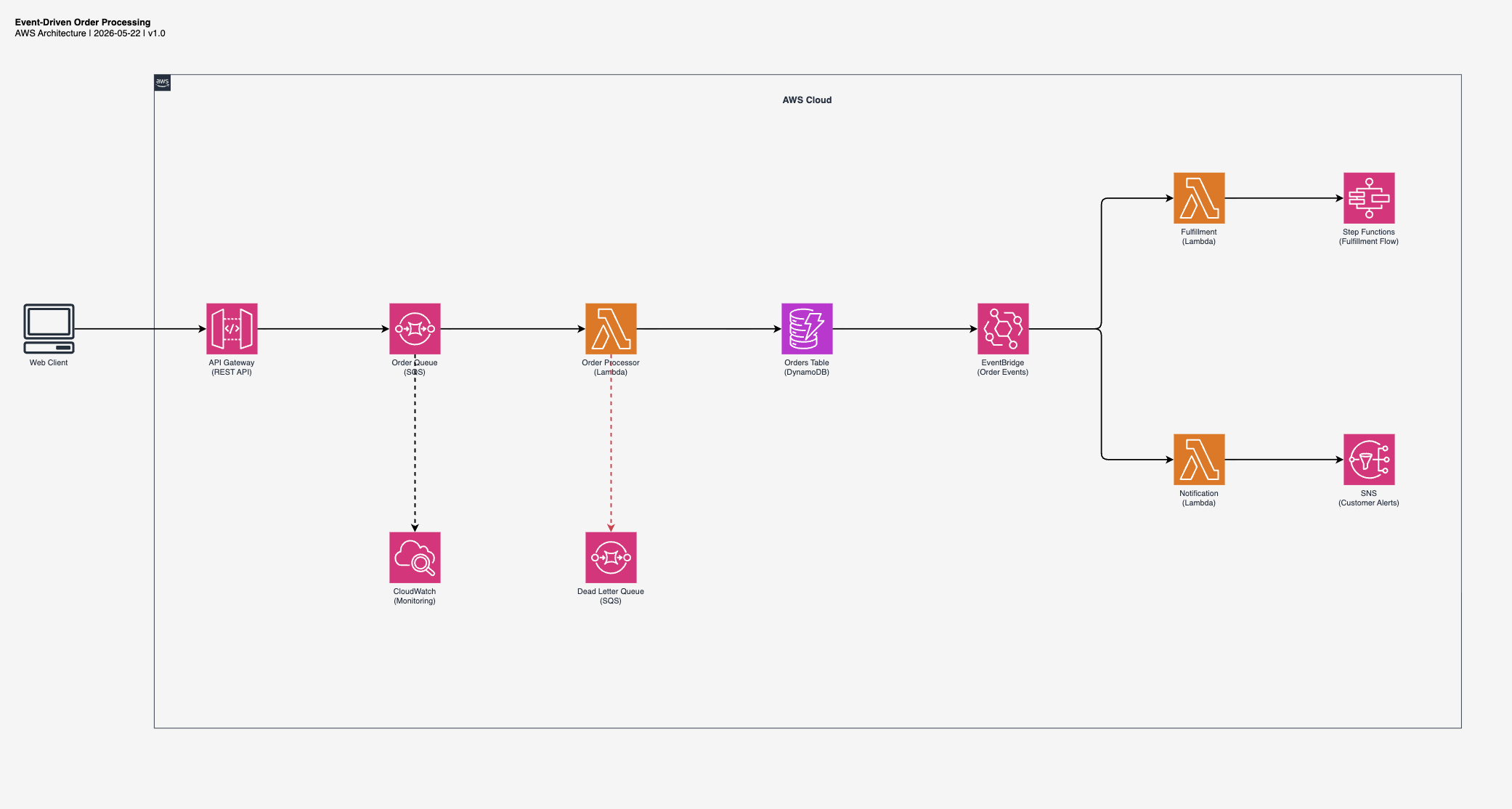
AWS architecture diagrams. One prompt. Every icon correct.
AI agents generate broken diagrams because stencil names are wrong. This skill carries 270+ verified icon mappings. Output opens clean in draw.io with zero manual fixes.
draw.io stencil names don't match AWS service names. Renamed services keep old identifiers. Without a verified catalog, agents guess and icons render as empty boxes.
Real photography. Programmatic precision.
Unsplash gives you the photograph for free. The LLM writes the overlay where text, data, and layout must be exact. Cost per image: ~$0.003.


| Service | Library | Rate limit | License |
|---|---|---|---|
| Unsplash | 3M+ photos | 50/hr → 5K approved | Free commercial |
| Pexels | 3M+ photo+video | 200/hr | Free commercial |
| Pixabay | 4M+ images | 100/min | CC0-like |
| Lorem Picsum | ~1K curated | Unlimited | Unsplash License |
Presentations and video. Still just code.
If an LLM can write SVG, it can write slides. If it can write React components, it can render video. The programmatic approach extends beyond static images.
The LLM generates a single self-contained HTML file. Speaker notes, transitions, auto-animate, code highlighting, LaTeX. Opens in any browser. No PowerPoint, no Keynote, no SaaS subscription.
React components rendered frame-by-frame to MP4. The LLM writes JSX with motion logic. Programmatic video: animated explainers, data visualizations, social clips. Each frame is deterministic.
From SVG to Unreal Engine. Same pattern. More power.
Every rendering engine that accepts code as input is an LLM target. The browser is just the beginning. Game engines, creative coding frameworks, and 3D tools all follow the same economics: tokens in, visuals out.
| Renderer | Capability | Typical tokens | Cost/image | LLM writes | Runs on |
|---|---|---|---|---|---|
| SVG (browser) | 2D vector | ~800 | ~$0.01 | SVG markup | Any browser |
| Canvas 2D (browser) | Pixel art, particles, simulations | ~2,400 | ~$0.04 | JavaScript | Any browser |
| p5.js (browser) | 2D creative/generative | ~1,500 | ~$0.02 | JavaScript sketch | Any browser |
| Three.js (browser) | 3D scenes, PBR | ~3,000 | ~$0.05 | JavaScript scene | Any browser (WebGL) |
| Manim (Python) | Math animations | ~2,000 | ~$0.03 | Python scene class | CLI + ffmpeg |
| Godot (.tscn) | 2D/3D game scenes | ~2,500 | ~$0.04 | Scene text file | Godot (free, OSS) |
| Blender (Python) | Photorealistic 3D | ~5,000 | ~$0.08 | bpy Python script | Headless CLI |
| Unreal Engine (Python) | AAA-grade real-time | ~8,000 | ~$0.12 | Python + Blueprints | UE Editor / headless |
| GPT Image 1.5 / Nano Banana 2 | Photorealistic | N/A | $0.02–0.20 | — | API |
Processing-based creative coding. Particles, physics, shaders, generative art. Sketches are typically 20–80 lines. Renders on canvas — same "browser renders for free" principle as SVG.
Full 3D scenes with PBR materials, shadows, post-processing. LLMs write Three.js fluently. Product shots, architectural visualizations, interactive 3D — all in the browser with zero infrastructure.
Hollywood-grade rendering from a Python script. Cycles path tracer, Eevee real-time. Runs headless: blender -b -P script.py. The LLM constructs scenes, sets materials, triggers renders.
Fully open-source game engine. Scene files (.tscn) are plain text — an LLM can write them directly. GDScript is Python-like. 2D renderer is excellent, 3D is capable.
Lumen GI, Nanite geometry, path tracing. Full Python scripting API. The LLM writes 50 lines placing actors, setting materials, positioning cameras. Renders a frame that rivals film VFX.
Publication-quality mathematical animations and explainers. The LLM writes a Python scene class, Manim renders frames to video. Used by educational creators worldwide.
Godot .tscn, Unreal Blueprints (JSON), Unity YAML scenes — all human-readable, all LLM-writable. The "code as canvas" principle applies directly to game content.
Blender, Godot, and UE5 all support headless/CLI rendering. No GUI needed. Perfect for CI pipelines: prompt → LLM → code → render → PNG fully automated.
LLM creates a reusable rendering skill (Blender material library, UE5 scene template, Godot prefab). First image costs $0.40. Images 2–1000 cost only prompt tokens. Same economics as your crayon-art example.
Same prompt. Four models. Real costs measured.
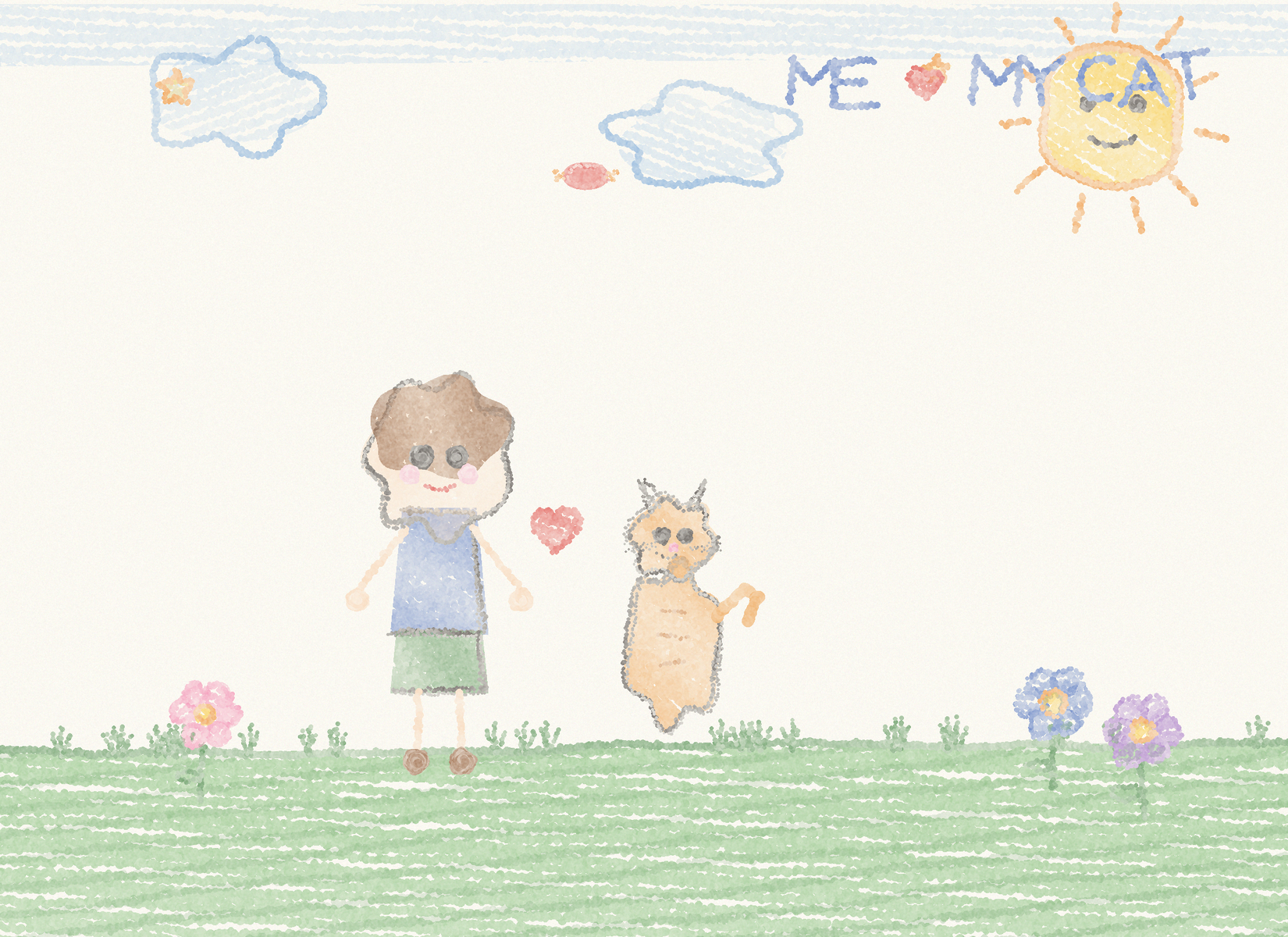
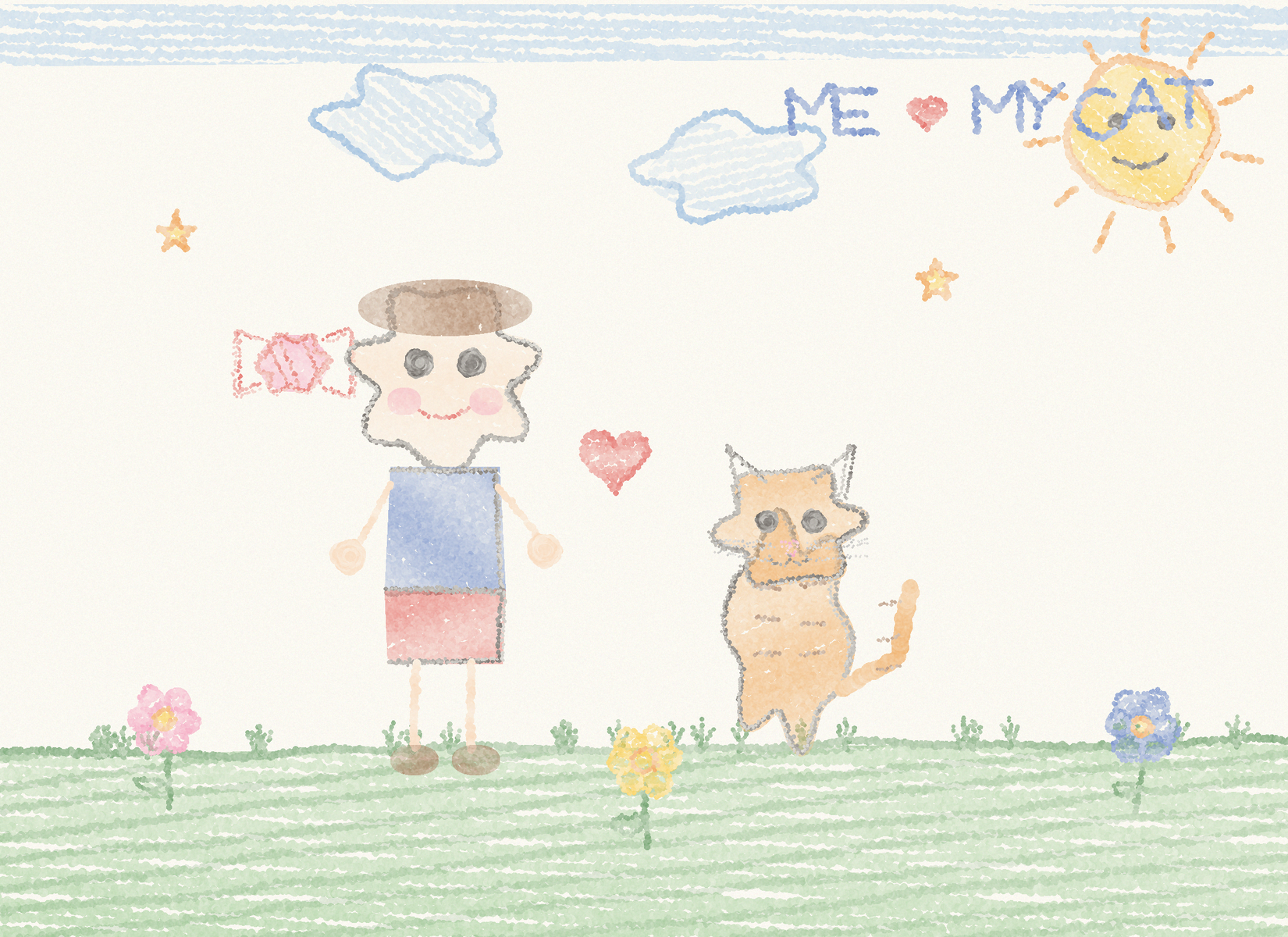
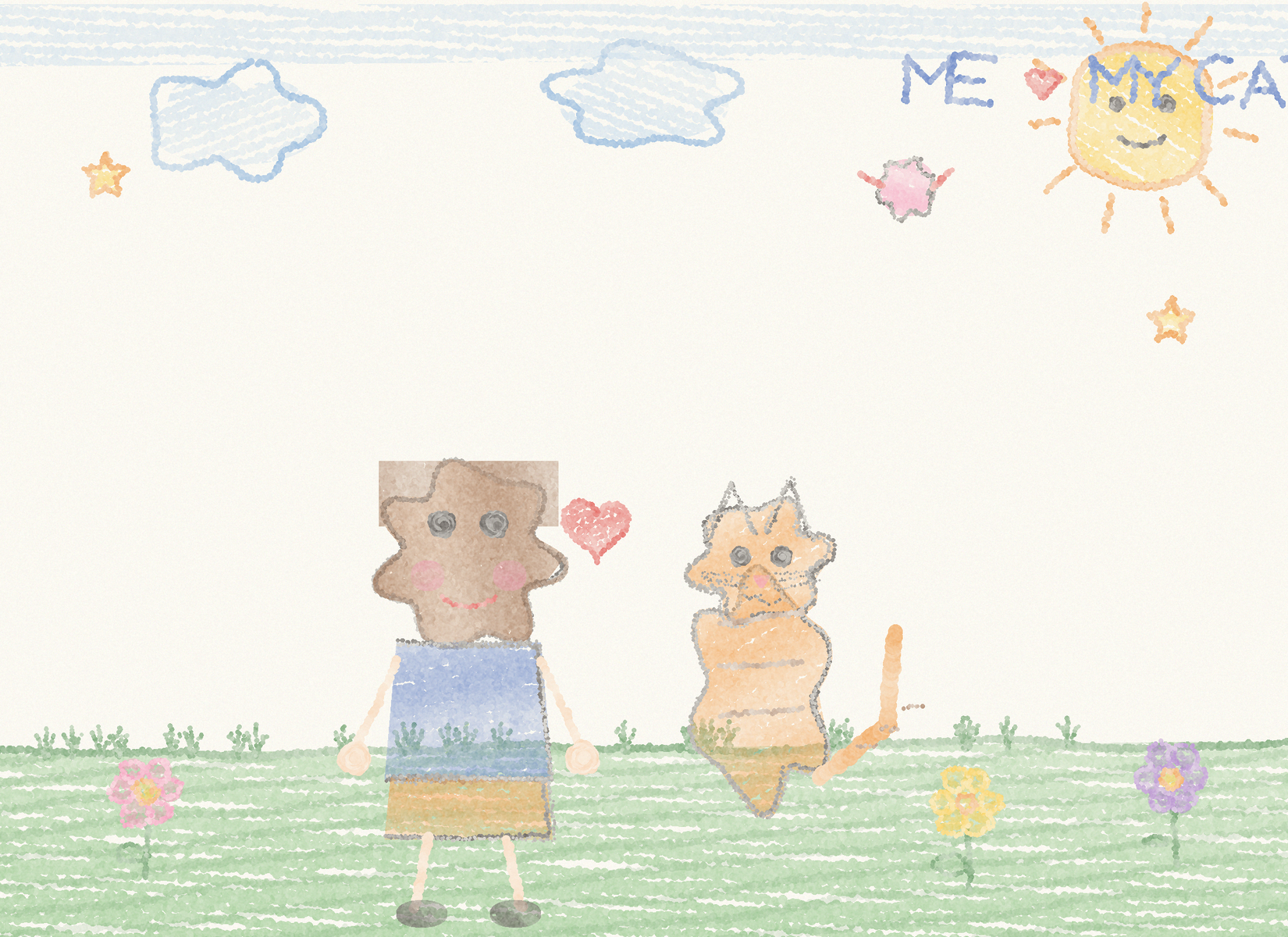
Crayon-style illustration (boy with cat) generated as SVG via AWS Bedrock. Every image below was produced programmatically in a single API call — no image generation models involved.
| Model | Time | In / Out tokens | Cost | SVG size | Visual quality |
|---|---|---|---|---|---|
| Claude Opus 4.6 | 69.1s | 322 / 6,437 | $0.163 | 15.9 KB | Most complete scene |
| Claude Opus 4.8 | 47.7s | 450 / 4,089 | $0.105 | 7.3 KB | Fastest, cleanest style |
| Claude Sonnet 5 | 48.6s | 450 / 6,128 | $0.093 | 10.8 KB | Cheapest, dark overlay issue |
| Claude Fable 5 | 100.0s | 450 / 7,531 | $0.381 | 13.2 KB | Sophisticated filters, slow |
| Model | Input | Output | Context | Notes |
|---|---|---|---|---|
| Opus 4.6 / 4.8 | $5 | $25 | 200K | Standard inference profiles |
| Sonnet 5 | $3 | $15 | 200K | Best cost, weakest visual result here |
| Fable 5 | $10 | $50 | 1M | Requires provider_data_share (30-day retention) |
| DALL-E 3 HD (comparison) | $0.08 flat | — | Non-editable PNG, ~15s, better artistic quality | |
Same models, different approach: each model writes a Python script using a custom crayon.py PIL library that simulates wax crayon on paper. The script is then executed locally to produce the PNG. Much more realistic crayon texture than SVG filters.
| Model | Gen time | Exec time | Total | Cost | Quality |
|---|---|---|---|---|---|
| Claude Opus 4.6 | 25.2s | 2.6s | 27.8s | $0.064 | Cleanest composition |
| Claude Opus 4.8 | 26.5s | 1.5s | 28.0s | $0.080 | Best cat, odd head shape |
| Claude Sonnet 5 | 51.3s | 8.8s | 60.1s | $0.051 | Detailed but hair block issue |
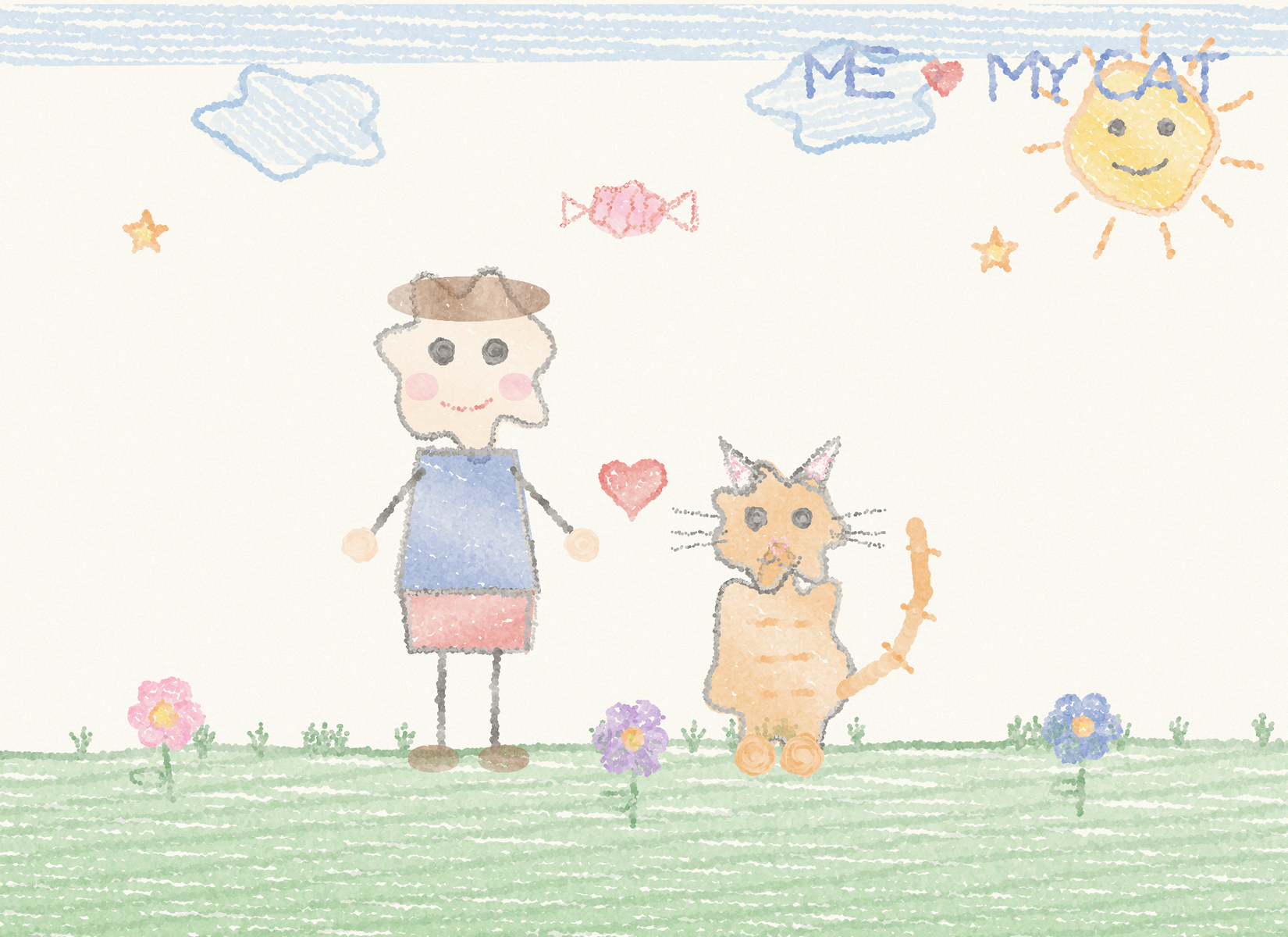

The full toolkit landscape
Every tool that fits the "LLM writes code → visual output" paradigm, plus the hybrid and diffusion approaches for comparison.
| Tool / Format | Output | Best for | Link |
|---|---|---|---|
| SVG (raw) | Vector image | Icons, diagrams, illustrations, charts | Native browser |
| HTML/CSS | Screenshots, cards | Social cards, OG images, dashboards | Puppeteer / Playwright |
| Matplotlib / Seaborn | PNG/SVG charts | Data visualization, scientific plots | matplotlib.org |
| Mermaid | SVG diagrams | Flowcharts, sequences, ER diagrams, Gantt | mermaid.js.org |
| D2 | SVG diagrams | Architecture, infrastructure diagrams | d2lang.com |
| PlantUML | SVG/PNG | UML, sequence, component diagrams | plantuml.com |
| draw.io XML | .drawio (editable) | AWS architecture, network, system design | aws-arch-diagram-skill |
| p5.js | Canvas / SVG | Generative art, animations, data art | p5js.org |
| Three.js | WebGL / 3D | 3D product views, scene renders | threejs.org |
| TikZ / LaTeX | PDF/SVG | Academic figures, math diagrams | TeX distributions |
| Excalidraw | SVG (hand-drawn look) | Whiteboards, sketchy diagrams | excalidraw.com |
| Reveal.js | HTML slides | Presentations, decks, speaker notes | revealjs.com |
| Remotion | MP4 video | Animated explainers, data videos, social clips | remotion.dev |
| Motion Canvas | MP4 video | Code-driven animations, manim alternative | motioncanvas.io |
| Manim | MP4 video | Math animations (3Blue1Brown style) | manim.community |
| GSAP | Animation library | Timelines, easing, scroll-triggers for SVG/Canvas/DOM | gsap.com |
| Lottie | JSON animation | Cross-platform animations (iOS/Android/web). Verbose JSON, high token cost | lottiefiles.com |
| Rive | Binary .riv | Interactive state-machine animations. Binary format, not LLM-writable | rive.app |
| Tool / Paper | Approach | Output | Status |
|---|---|---|---|
| GenClaw | Agentic: Conceptualize → Sketch (code) → Color (diffusion) | PNG (photorealistic + accurate text) | arXiv May 2026 |
| Unsplash + LLM overlay | Free photo API + code-generated text/data overlay | Composite image | Production-ready |
| Vercel OG | JSX → image at the edge (Satori engine) | PNG (social cards) | vercel.com/docs |
| Satori | HTML/CSS subset → SVG (no browser needed) | SVG | github/vercel/satori |
| Puppeteer / Playwright | HTML → screenshot (headless browser) | PNG/PDF | Production-ready |
| Service | Cost/image | Text quality | Editable | Best for |
|---|---|---|---|---|
| GPT Image 1.5 (OpenAI) | $0.009–0.20 | Good | No | Flagship, editing, prompt adherence |
| gpt-image-1-mini (OpenAI) | $0.005–0.05 | Good | No | Budget, prototyping, volume |
| Nano Banana 2 (Google) | $0.045–0.15 | Good | No | Price-performance, Gemini ecosystem |
| Nano Banana 2 Lite (Google) | $0.017–0.08 | Good | No | Budget tier, batch workflows |
| Midjourney v7 | $0.08–0.20 | Good | No | Artistic, stylized |
| Flux (Black Forest Labs) | $0.01–0.05 | Good | No | Fast, open-weight |
| Ideogram 3 | $0.02–0.08 | Best | No | Text-heavy images, logos |
| Paper / Resource | Finding | Date |
|---|---|---|
| GenClaw (arXiv:2605.30248) | Code-driven agentic generation scores 0.878 compositional accuracy vs GPT-Image 0.832 | May 2026 |
| SVG Generation Benchmark | Claude best at abstract instructions, Gemini cleanest code, GPT most creative | Dec 2025 |
| LLM Cost at Scale | Flash-tier models (Gemini Flash, Haiku) achieve $0.004–$0.014/image for simple SVG; frontier models (Sonnet, Opus) $0.05–0.10 for quality output | 2025–2026 |
| Text Rendering Comparison | Code-based approaches achieve 100% text accuracy vs 60–85% for diffusion models | Ongoing |
EVERY VISUAL ON THIS PAGE WAS PRODUCED BY CODE. NO DIFFUSION MODEL WAS CALLED. NO PIXEL WAS GUESSED.